
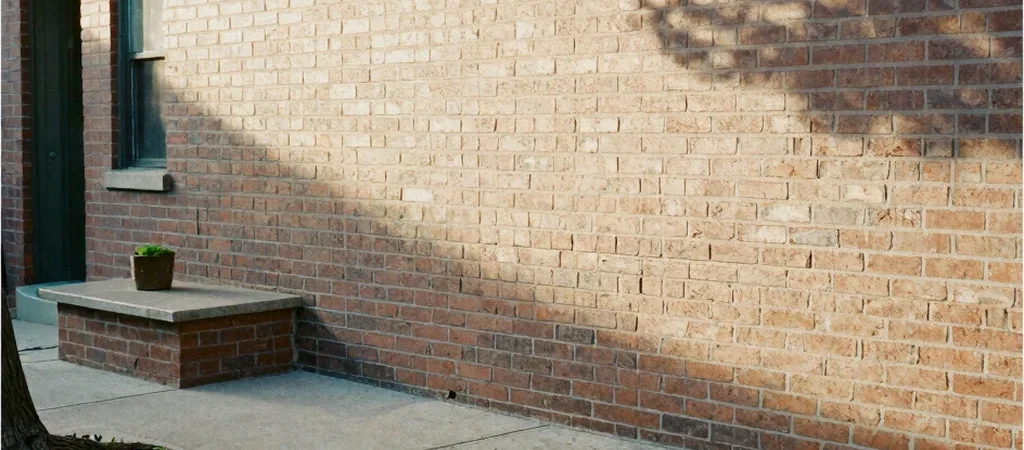
On a familiar walk, it is easy to arrive without remembering the journey. Then something interrupts the routine: a strip of late-afternoon sun across a stoop, the chalk outline of a hopscotch grid, or a window left open just enough to let out the sound of a radio. The street has not changed all at once. Your attention has.
Let the route stay ordinary
There is no need to seek out a landmark or turn a walk into an assignment. Choose a route you already know, perhaps the block between home and the bus stop, and notice one thing you usually pass without looking. The point is not to collect unusual sights; it is to give an everyday place the time it takes to come into focus.
Notice what changes slowly
A corner can look different from one week to the next without announcing the change. A planter fills in, a paper sign fades in a shop window, or the bare branches along the sidewalk begin to soften with new leaves. These details reward a second look because they belong to the pace of a place, not the pace of a headline.
Try returning at another hour, when shadows fall across the block from a different direction. The same storefront may feel quiet in the morning and busy after school lets out. A small shift in light or timing can show how much of a place is made by the people moving through it.
Keep one detail with you
After the walk, remember just one thing: the blue paint on a gate, the smell of wet pavement, or the pause before a crossing signal changes. You do not need a photograph or a polished description to make the moment count. A detail you can still picture later is proof that the ordinary route had more to offer than it first seemed.